
Can Feeding My Child Peanuts Early Prevent Peanut Allergy?
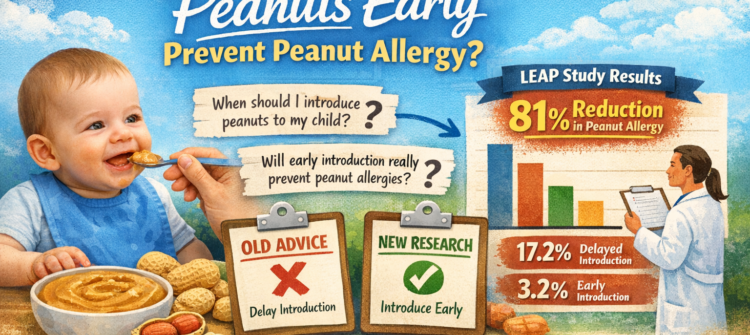
Many parents ask: “When should I introduce peanuts to my child?” and “Will early introduction really prevent peanut allergies?” These questions reflect a significant shift in how we approach food allergies in infants. The answer is encouraging and backed by substantial research. Recent evidence shows that introducing peanuts early in your infant’s diet can significantly reduce the risk of developing peanut allergy, contradicting decades of previous advice that recommended delayed introduction.
Understanding the Peanut Allergy Problem
Peanut allergies have become increasingly common over the past few decades, affecting approximately 2% of children in the United States. Unlike some childhood allergies that children may outgrow, peanut allergies typically persist into adulthood. These allergies can cause severe, life-threatening reactions, making prevention a critical public health priority.
For years, parents were advised to delay introducing peanuts and other allergenic foods until after their child’s first birthday, or even later for high-risk children. This guidance, it turns out, may have actually contributed to the rising rates of peanut allergies we’ve seen in recent decades.
The Groundbreaking LEAP Study Changed Everything
A landmark 2015 study called the Learning Early About Peanut Allergy (LEAP) study fundamentally changed how we approach peanut allergies in children. Published in the New England Journal of Medicine, this research demonstrated that early introduction of peanuts is not only safe but highly effective at preventing allergies.
The LEAP study, conducted by researchers at King’s College London, enrolled over 600 infants between 4 and 11 months of age who were considered at high risk for developing peanut allergy due to severe eczema, egg allergy, or both. The children were randomly assigned to either consume or avoid peanut products until 5 years of age.
The results were remarkable and unexpected. Among children who avoided peanuts, 17.2% developed peanut allergy by age 5. In stark contrast, only 3.2% of children who regularly consumed peanut products developed the allergy. This represented an 81% reduction in peanut allergy development among high-risk infants who consumed peanuts early and regularly.
Current Guidelines Reflect This Research
Following the LEAP study results, major health organizations revised their recommendations. In 2017, the National Institute of Allergy and Infectious Diseases (NIAID) released updated guidelines endorsing early peanut introduction for most infants.
The American Academy of Pediatrics (AAP) similarly updated its guidance, recommending that peanut-containing foods be introduced to infants around 6 months of age, and potentially as early as 4 months for high-risk infants, after other solid foods have been tolerated.
These guidelines represent a complete reversal from previous recommendations and are based on strong scientific evidence showing that early introduction helps the immune system develop tolerance rather than sensitivity to peanuts.
Real-World Results Are Proving the Guidelines Work
The results are striking and demonstrate that these guidelines are translating into meaningful public health benefits. According to a 2025 study from Children’s Hospital of Philadelphia (CHOP) published in Pediatrics, peanut allergy rates in children under three years old have declined by 43% over the last several years since these new guidelines were implemented.
This study analyzed data from over 1.3 million children and found clear evidence that the widespread adoption of early peanut introduction has led to a substantial decrease in peanut allergy prevalence. The research provides real-world confirmation that what worked in controlled clinical trials is equally effective when applied across diverse populations in everyday settings.
Early Introduction Prevents Other Food Allergies Too
The benefits of early allergen introduction extend beyond peanuts. The same CHOP study found that early introduction practices led to a 36% reduction in all new cases of food allergies, including common allergens like milk, egg, and tree nuts.
Additional research, including the Enquiring About Tolerance (EAT) study published in the New England Journal of Medicine, examined the early introduction of six allergenic foods: peanut, egg, cow’s milk, sesame, whitefish, and wheat. While the results were less dramatic than the LEAP study due to adherence challenges, the research supported the safety and potential benefits of early introduction for multiple foods.
How to Safely Introduce Peanuts to Your Child
Current guidelines from the NIAID recommend introducing small amounts of peanut-containing foods early in an infant’s life, with the timing dependent on the child’s risk level:
Low-risk infants (those without eczema or known food allergies) can have peanut-containing foods introduced around 6 months of age, along with other solid foods, according to family preferences and cultural practices.
Moderate-risk infants (those with mild to moderate eczema) should have peanut-containing foods introduced around 6 months of age, after other solid foods have been tolerated.
High-risk infants (those with severe eczema, egg allergy, or both) should have peanut introduction as early as 4 to 6 months of age, but only after evaluation by an allergist or healthcare provider. Some high-risk infants may need supervised introduction or testing before home introduction.
This careful, gradual approach helps the immune system develop tolerance rather than triggering allergic reactions later. The key is starting early and introducing these foods in age-appropriate forms consistently, ideally at least three times per week.
Age-Appropriate Forms of Peanut Products
For infants, whole peanuts and chunky peanut butter pose a choking hazard and should never be given to young children. Instead, parents should use:
Smooth peanut butter thinned with water, breast milk, or formula to achieve a consistency the infant can safely swallow. Start with about 2 teaspoons of smooth peanut butter mixed with 2 to 3 teaspoons of liquid.
Peanut powder or peanut flour mixed into purees, cereals, or other age-appropriate foods.
Peanut puff snacks specifically designed for infants and young children, which dissolve easily in the mouth.
The goal is to provide approximately 2 grams of peanut protein three times per week. Once introduced, peanut-containing foods should be maintained regularly in the child’s diet to sustain tolerance.
What to Watch For During Introduction
When introducing peanuts for the first time, parents should watch for signs of an allergic reaction, which may include hives or skin rash, swelling of the lips, face, or tongue, vomiting or diarrhea, coughing or wheezing, or difficulty breathing.
Most reactions occur within minutes to two hours after exposure. The AAP recommends introducing peanut products at home rather than at a daycare or restaurant, when the child is healthy, and when a parent can watch the child for at least two hours afterward.
If any signs of an allergic reaction occur, parents should stop feeding the child and seek medical attention immediately. Severe reactions require calling 911.
Special Considerations for High-Risk Infants
For infants with severe eczema, egg allergy, or both, consultation with an allergist before introducing peanuts at home is strongly recommended. An allergist may perform testing such as a skin prick test or blood test to assess the likelihood of peanut allergy.
Based on these results, the allergist may recommend supervised introduction in the office, where emergency treatment is immediately available if needed, or may clear the child for introduction at home with specific instructions.
When to Seek Professional Guidance
If you feel nervous about introducing highly allergenic foods to your infant, you’re not alone. Many parents have questions about timing, preparation, and what to watch for during introduction.
At Vallen Allergy and Asthma, we help parents navigate early food introduction safely. We can discuss your child’s individual risk factors, review their medical history including any eczema or other food allergies, create a personalized introduction plan, and provide support throughout the process.
Professional guidance is particularly important for high-risk infants or if you have concerns about your child’s readiness for solid foods.
Conclusion: Evidence-Based Prevention Is Working
The dramatic 43% decline in peanut allergies among young children represents a major public health success story. By following evidence-based guidelines for early peanut introduction, parents can significantly reduce their child’s risk of developing this potentially dangerous allergy.
Don’t let uncertainty prevent you from giving your child the best protection against food allergies. Contact us to discuss your options and get answers to your questions about early allergen introduction.
Sources:
- Du Toit G, et al. New England Journal of Medicine, 2015 (LEAP Study)
- National Institute of Allergy and Infectious Diseases (NIAID) Addendum Guidelines, 2017
- American Academy of Pediatrics Clinical Guidelines
- Perkin MR, et al. New England Journal of Medicine, 2016 (EAT Study)
- Children’s Hospital of Philadelphia, Pediatrics, 2025